What now…

Monday.

I was not prepared for the emotions that erupted in me on Monday. Oddly, I had not considered how I would feel when the Infected Blood Inquiry Report was published. I hadn’t believed that it would take centre stage on the news, be the topic of conversation at people’s dinner tables or at the pub, and finally produce a government apology – and for that apology to be quite as meaningful as I felt it to be.

I was not prepared for the love that was shown to me from friends, many of whom I have not spoken to in over 20 years. I was not prepared for people’s shock that they simply weren’t aware of both my situation, or indeed of the scale of the impact and the fact that the disaster extended beyond the haemophiliac community, but was far more widespread than they realised.

I was happy that there was now a chance for people to stop and think “Shit, I had an invasive operation in the 1970s, 80s or early 90s. Maybe I was given a blood product or a transfusion in the process. I should go to my GP and request a Hepatitis C test”. I was happy that there was a chance for the stigma to be lifted – it felt like that had begun. I was cautiously happy that the surviving infected blood community could, at last breathe, and the lost could rest more peacefully.

I went to bed feeling that the vulnerability I had shown in my blog piece on Monday morning was being rewarded and that my voice – and tens of thousands of others – was finally being heard. I closed my eyes wondering if tomorrow would bring further belief that the state was getting out of its own way and that institutions could, in fact, change for the better.

Tuesday.

More messages, this time from two friends who underwent blood transfusions in the 1980s.

I had been heard.

Enter John Glen MP.

The idea of financial compensation has always made me uncomfortable. Overthought (I do a fair bit of that), it’s the price of your life laid bare in front of the world whilst you’re still living, and at least for me, there is guilt.

Guilt that others have suffered more, for far longer (at least consciously). In the case of the infected, in death or the deep stigma that an HIV or even a Hepatitis diagnosis brought in the 1980s and 90s. In the case of the affected, decades dedicated to care, followed by decades endured with grief and injustice.

I have only been cognizant of my illness since 2018 – after the Infected Bloody Inquiry was set up. A fraction of the timelapse of known pain and conscious suffering that most other victims have experienced, although perhaps a deeper loss of autonomy and, as I talked about on Monday morning, wounding depths of existential pain and unconscionable grief.

Any compensation I receive may be for the injustices of the past, but my wife has done a sterling job of pointing me to an uncertain future, one that, as much as I try to avoid thinking about it, conceivably may not physically involve me for as long as we would like, but must involve a legacy that attempts to outlive and outshine any life I may have had, if only this had not happened to me.

Financial compensation is vital for that very reason – not just in an award for me, but for her and my family, as the proposed scheme lays out. Indeed it will help open the door for me to give more of myself to my family and friends, to worry less about the short term and allow me to accomplish more for the world around me – and indeed, for myself. I have always considered it a virtue and strong character trait to be unselfish; to give more of myself than I receive in return. Hepatitis C has meant that there was always less of me to give than any of us realised, so it’s right that I take a bit back – even if the stubbornness in me will always prevent me from doing so sufficiently.

The smaller print of the initial proposal for the compensation scheme that is to be delivered by the Infected Blood Compensation Authority (IBCA) is somewhat concerning, though. Both via the mouth of the Paymaster General, Mr Glen, from the Despatch Box in the House of Commons on Tuesday morning and in the detailed summary of the proposed scheme on the government’s website, it is clear that the government, upon settlement of compensation awards, intends to end the vital Infected Blood Support Schemes, which have provided the infected with monthly payments that have been critical for most victims and provided in the understanding that these payments were for life AND not in lieu of compensation.

Whilst Mr Glen made it clear that any compensation awarded would be topped up to match the amount provided through infected blood support schemes, this would, when measured against the status quo, mean that no award would in reality be made. Not cool.

Still, I went to bed on Tuesday night safe in the knowledge that, with the voices of the infected and affected now being heard everywhere, there was plenty of headway for the “minutae” to be ironed out in Parliament and, with Sir Robert Francis at the helm of the IBCA, confident that the Inquiry’s recommendations would be upheld. The state had nowhere to hide with the court of public opinion wide, wide open – even without an ITV mini-series.

That justice could indeed prevail.

That the undiagnosed would gain the knowledge and space needed to realise that you can live with Hepatitis C for decades without knowing it.

Wednesday.

Two days. Two fucking days. That’s how long “the greatest injustice this country has seen” (Andy Burnham) was allowed to remain at the centre of public discourse. Paula Vennells’ sobbing in to her tissue ticked me off, but then came an event that pushed any coverage the Infected Blood Scandal had been getting from the headlines to an after thought.

I had believed Rishi Sunak’s statement to the House on Monday. I wasn’t a million miles off wanting to accept his apology, given on behalf of 9 successive governments. I believed from the speeches given from the respective major parties in the Commons and the devolved parliaments that, perhaps, politicians and the state were capable of change – of not playing politics with people’s health.

With a General Election now called, there is a strong possibility that the Victims & Prisoners Bill does not pass as law in the wash-up before Parliament is dissolved in a few short days; that all that was promised, literally on Monday, is not delivered to those who need both justice and redress before it is too late; that the promise for candour amongst civil servants and politicians, coupled with a changing of ways is quickly forgotten in campaigning and electioneering… no politician out on the campaign trail, save perhaps the wonderful Dame Diana Johnson and Sir Peter Bottomley, will dare stand up for victims of a disaster built on state flaws, mistrust and cover-up involving all three of England’s leading parties.

The Infected Blood community, like many other embattled movements in recent times, is not going away, whether victims live to see justice or not. We are used to false hope, but this is brutal and unforgiveable. Whilst compensation may come as originally laid out, or a few months or years later under a Labour government, in an effort to ameliorate the damage on our health that the Infected Blood Scandal wrought, Rishi Sunak has robbed us of the one major thing Sir Brian Langstaff proclaimed we had accomplished with the publication of the report on Monday – having our voices finally heard.

Today.

Right now, I suspect the “major issue” chatter around family dining tables has moved on to talk of the election. Friends meeting up in pubs are talking about the Euros. The Infected Blood Scandal is in their rear view mirror. A problem solved. A community’s grievance compensated for. Nothing for us to worry about. Their all-too-fleeting thought that, “maybe I was given a blood product or transfusion during that operation 35 years ago” now gone from their minds.

“It can’t have happened to me. Ooh, there’s a funny Rishi Sunak meme”.

If you haven’t guessed yet, I’m not going to let the message fade quite so readily, even if this blog and my social media profiles don’t quite have the reach of newspaper front pages and round the clock news channels.

It’s feasible that I may have already helped to save two lives this week by putting my vulnerability out there. It should be eternal shame & damnation for Rishi Sunak that he’s blocked this message from being delivered to thousands of others, but this wound he or any other politician tries to widen is already open and whilst the scars will always remain, I, like many others, am determined not rest until justice is delivered and the lives and memories of those known and unknown victims of the Infected Blood Scandal are treated with the respect they deserve.

(Photo: REUTERS/Hollie Adams)

What if…

“What If…”

Many people have sent me messages this morning, wishing me luck, sending me their thoughts, asking how I’m feeling about the much anticipated publication of the Infected Blood Inquiry report. I’m grateful. Here’s where I’m at with it all right now and I am hopeful that you’ll take the positives in the message I have put together.

It’s been almost five years since I gave my witness statement to the report, and that feels like a lifetime ago.

It’s been 2,042 days since I found out I had contracted Hepatitis C during a heart operation I had at the age of 3. For 11,858 days, I lived with a disease I had no knowledge of.

The past few years have presented a wide range of emotion and taught me a great deal about life and what it means to be alive.

In times gone by, when I’ve been given bad news or come up against a real problem, I’m a “right let’s work out how to fix this right now” kind of guy – a reaction of mind, rather than of feeling. Even when my Dad died suddenly in 2012, this was my instinct and to a large extent, I made it work for me. I put off the grief in favour of dealing with the practicalities of his death – never ideal by the way.

When I received my diagnosis, initially my modus operandi gave me this same opportunity. I had a disease. It had damaged my body. I needed to do whatever it took to get well. That’s by and large been taken care of fairly quickly. Inevitably, I’ve had years taken off my life, and whilst that’s far from ideal, I consider myself lucky from a physical standpoint. Had I known about my illness sooner, the wait for treatment would have been longer and the medicine required, more severe in its side effects. Considering the time I had Hep C for, the damage to my body wasn’t as bad as it could have been. Someone is probably to blame for this, but it can’t be helped now, so let’s crack on.

Whilst my youth was unknowingly stifled, I enjoyed it without any stigma that I and my family would have had to endure at the time. The world was very different in the 1980s and those who did physically suffer worse by contracting HIV, as well as those who had been given what was known as “non-A/non’B Hepatitis” at the time, all had to face a world that looked down on them as a result. And I have a wonderfully supportive family and friends. Two businesses, great colleagues. I get to have fun. And I’m alive. Lucky, right? Let’s just keep this show on the road.

Well yes. Every day I count myself lucky.

But also NO. Big ‘Nos’ that have stopped me in my tracks.

No, because it should never have happened.

No, because someone somewhere could have prevented it from happening or at the very least, could have owned up to it far, far sooner.

No… because I’ve lived a life, hopefully around half of which, should, would and could have been different. This cast a huge, existential shadow on me, one that my go-to method of facing adversity was simply inadequate to meet.

“If this hadn’t happened to me, what would I have been?”

“Where would I have been?”

“What would I have become?”

“I would not have met my wife. Therefore, I would not have had my children. They would not exist, if only this hadn’t have happened to me.”

“Am I to be glad this happened to me?”

“Has my entire life been a lie or, at least based on someone else’s lie?”

One of life’s lessons we are all taught as children, and repeatedly told as we grow, is not to dwell on those should have, would have, could have moments. Life’s too short for regrets.

But shit happens to us all. I used to brush it off and keep moving forward in my own, probably naive way. I have needed major help on this one though.

I’ve had to go places in psychotherapy sessions that I never envisaged, but professional support has been one of the best things I have ever done (get help, even if you think you’re good!). I have learned to face these unfathomable questions with an overarching sense of perspective that now governs a new way of being.

Day in day out, I try to live a life of reflection.

Regret comes to us all at some point, whether of our own doing or not. If you’re like me – a “million miles per hour kind of person”, do not simply plough on to try move on from life’s lows, but choose to face them. Properly. Take the time to build the skills needed for true reflection and I promise that you’ll learn a great deal about yourself in the process and your life will be more authentic and happier for it.

So whilst I will read the Inquiry Report diligently – so much work has gone in to it and I’m grateful for the redress I hope it brings to me and tens of thousand of others, I am not anticipating it will answer any of the existential questions I have had to face. Only the rest of my life and how I choose to live it can do that. And so, rather than be at Westminster today, I am lucky enough to be at my children’s sports day. Just so long as it does, life goes on.

My Hepatitis C Story

Find the Missing Millions logo blue text

For 33 years my life has taken a path it wasn’t supposed to.

Whilst that life has been extraordinary and full of immense joy and I wouldn’t change it one bit, in October last year I learned that it had been limited. I learned that the immense tiredness I suffer from – which I had put down to the normal life of a new parent running a business; that the aches, pains and lack of fitness – which I had put down to a naturally sedentary lifestyle and poor diet, all had a hidden cause found in an event that took place on 30th April 1986, when I was just two years old.

I was born with a ventricular septal defect, more commonly known as a hole in the heart. My parents sought the very best treatment they could afford. I was fortunate enough to be placed under the care of one of the leading cardiologists in the world and one of the world’s leading heart surgeons. I underwent surgery in one of the leading private hospitals in the world to repair the VSD and, to the relief of my parents, all had gone to plan. I knew no difference, of course, and annual check ups with this world leading cardiologist followed and aged 16, I was given the all clear to live a full and normal life.

To my parents, further relief. To me – carte blanche to do what any teenager in the 1990s did… drink to excess whenever I could get away with it. University followed and then a career in an uber-thirsty industry. It’s safe to say the drinking mantra really held true.

From my mid-teens, my ability to recover from physical exercise got progressively worse. I suffered from foot, knee and then chronic back pain. Several attempts at personal training courses and marathon preparation ended in failure as they destroyed my body and spirit. Just an unfit, overweight so-and-so who couldn’t stay the course, I told myself. A failure…

On 18th October 2018, I learned that the failure was not mine. Several weeks prior I had been laid up in bed with unusually severe joint and muscle pain – similar to those experienced with bad flu, without the headache – and – rarely for me – I sought the doctor’s help. Blood tests ensued and I was referred to a consultant haematologist via my private medical insurance on the basis of suspected haemochromatosis – a condition that sees your body keep too much iron in the blood, leading to joint pain. A further benefit to my private medical cover was more extensive tests. Whilst away on business in Lisbon, I received a call from the consultant saying that, whilst I didn’t have haemochromatosis, the tests had thrown up a surprising result.

I had Hepatitis C.

She went through common causes of the disease, all tied to person to person transfer of blood:

a) Ever shared a needle whilst partaking in drugs? No.
b) A visit to a low-brow tattoo parlour? No.
c) Homosexual sex? No.
d) Did your mother have it whilst you were in utero? No.
e) Do you share razors or toothbrushes with anyone? No.
f) Ever had a blood transfusion? Hmmm. I don’t think so, but I did have open heart surgery in 1986…

In the 1970s and 1980s, the NHS in the UK bought blood product from the United States. Large groups of paid donors were used (as many as 60,000 per batch, and including prisoners and drug addicts); it only required one infected donor to contaminate an entire batch, which would then infect all of the patients that received that material.
It took an incredibly extensive research process for me to determine whether or not I was given blood product during my surgery – fortunately I had the time and wherewithal to know who to speak to. My medical notes were not clear, but I had been told, by cardiologists practicing today and in yesteryear, that in all probability, whilst a transfusion was unlikely, I would have received blood product – product which private hospitals sourced from the NHS – as part of a cardiopulmonary bypass, which was routine for the surgery at the time. Eventually, this was confirmed by perfusion records held by the private Harley Street Clinic, where I had undergone surgery in 1986.

Hepatitis C is a virus that can infect the liver. If left untreated, it can sometimes cause serious and potentially life-threatening damage to the liver over many years.

I have had it for 33 years.

I visited a consultant hepatologist who confirmed the diagnosis and performed a fibroscan on my liver there and then. The anxiety I felt during this was horrendous.
I have fibrosis of the liver.

Fibrosis is the formation of an abnormally large amount of scar tissue in the liver, causing it to not function as it should.

On a chart of a healthy liver and a fully cirrhotic liver, my liver is just beyond halfway bad, but not life threatening for now. In my head, utter relief – I had a second chance. The reality is I have liver disease. No alcohol, an improved diet and fitness regime were the orders of the day, but the fatigue will ensue until such time as my liver recovers. That may never happen, even with lifestyle improvements.

The course of treatment for the strain of Hepatitis C I contracted was relatively straightforward, in spite of some major headline side-effects, which I fortunately avoided. 3 months of tablets through the NHS – thankfully, as the rack rate price of these pills in north of £30k if living abroad. Compared with the treatment available just 5 years ago, the process is relatively painless.

I am now 99% sure to have been cured of Hepatitis C, but I have been internally scarred for life – physically and emotionally. Knowing the happy existence you have lead has been hampered through errors made by someone or a group of people, who may very well remain nameless, is a far harder pill to swallow.

What is truly shocking though is the lack of public awareness; of public warning.

And so, as we approach World Hepatitis Day on Sunday 28th July, rather than commenting on this post or giving me sympathy (please don’t!), all I ask for is for you to share this post. It may save someone’s life.

Hepatitis C is a silent disease for most people. I was so lucky to have identified it when I did. Diagnosis is a simple blood test and the treatment, for most, is really straightforward, so don’t be afraid to go and get checked out. Whilst those who have used intravenous drugs or have had dodgy tattoos have, on the whole, been identified and cured by the NHS, I urge anyone who underwent any form of invasive surgery – even privately – in the 1970s and 1980s in the UK to demand a test from their GP, even if you have no obvious symptoms. Note – this applies even if you had surgery in a private hospital. If you or anyone you know receives pushback to this, I urge you or them to write to your/their MP to demand a public health warning is issued prior to the result of the ongoing Infected Blood Inquiry and any conclusions and recommendations it makes, which may still be a year or two away.

My life is not as it might have been. I have used the words ‘fortunate’ and ‘lucky’ many times in this post and that holds true in the life I have lead particularly as I am now improving in health. The same may not be true for millions of people in the UK and worldwide who don’t identify this disease in time. Please, please, please – no sympathy – just share this post to help find the missing millions and rid the world of this illness.

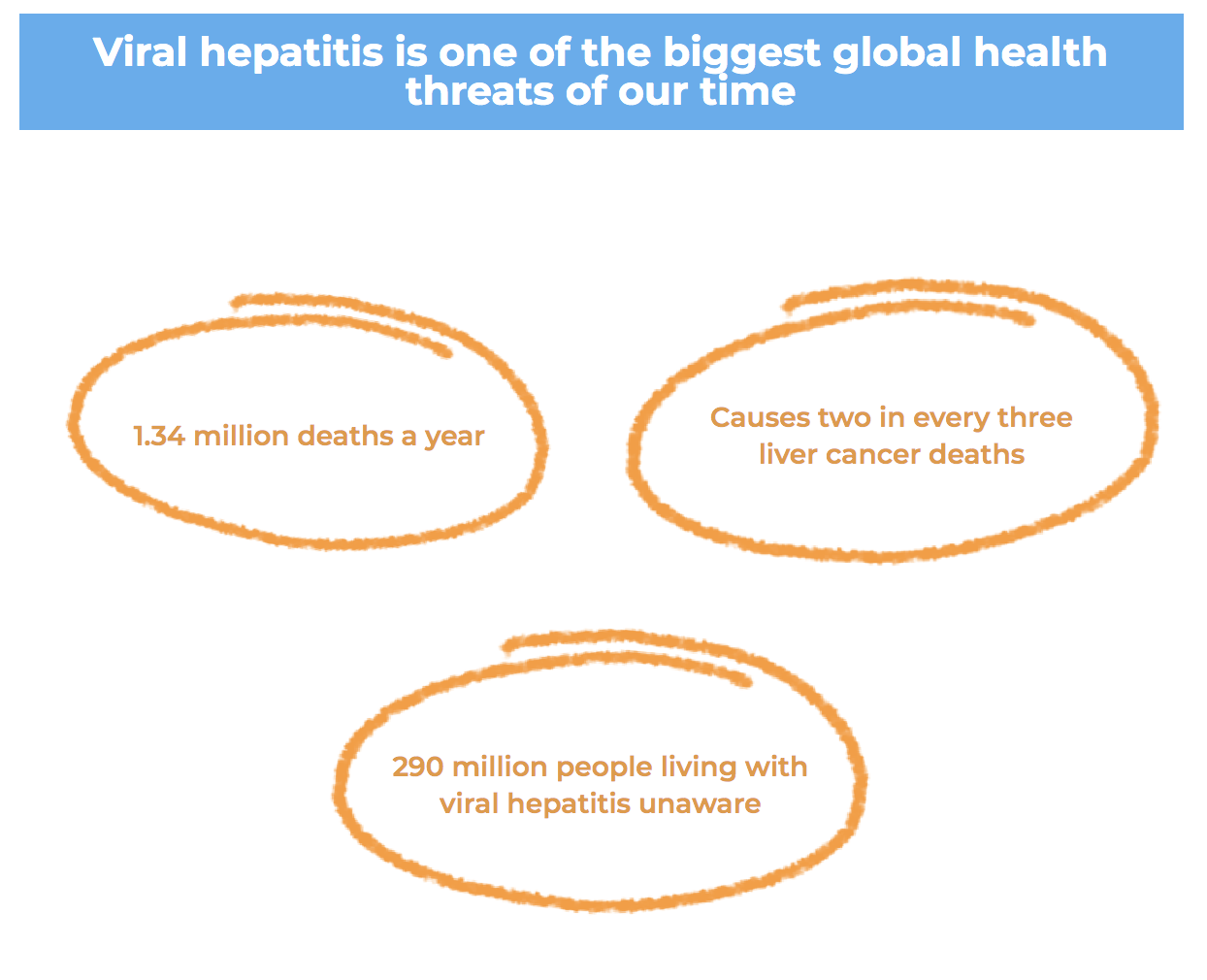
hep stats.png

Find the Missing Millions logo blue text